Albino Pearl Stingray Male
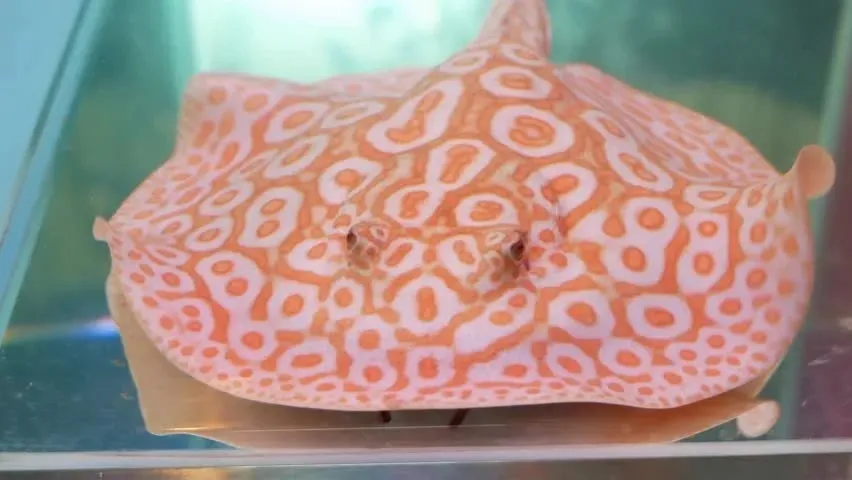
Albino Pearl Stingray Male is distinguished by its unique coloration and graceful form. Unlike its wild counterparts, the albino variety lacks pigmentation, resulting in a creamy white or pale pink body that contrasts beautifully with its dark eyes and barb. This genetic mutation enhances its visual appeal, making it a favorite among hobbyists seeking something extraordinary.
Measuring up to 12-18 inches in diameter, the Albino Pearl Stingray Male has a flat, disc-shaped body covered in smooth skin rather than scales. Its pectoral fins are broad and wing-like, allowing it to glide effortlessly across the substrate. A long, whip-like tail extends from the body, equipped with a venomous spine for defense – a feature that demands respect during handling.
Males of this species can be identified by their more slender build and subtle differences in fin shape compared to females. The “pearl” aspect refers to the iridescent sheen on their skin, which, in albinos, appears as a subtle glow under proper lighting. Their mouths are located on the underside, adapted for bottom-feeding, and they possess spiracles for breathing in low-oxygen conditions.
Natural Habitat and Behavioral Traits
In the wild, pearl stingrays inhabit the freshwater rivers and tributaries of South America, particularly in regions like the Amazon Basin. They are bottom-dwellers, spending much of their time buried in sand or mud, emerging to forage or bask in shallow waters. The Albino Pearl Stingray Male exhibits similar behaviors in captivity, preferring a sandy substrate where it can partially bury itself for security.
Behaviorally, these rays are generally peaceful and non-aggressive, making them suitable for community tanks with compatible species. The male Albino Pearl Stingray is known for its curious nature, often investigating tank decorations or following the movements of other fish. They are nocturnal by inclination but adapt to daytime activity in well-lit aquariums.
Socially, males can coexist with females or other rays, though providing ample space prevents territorial disputes. Their gliding motion is mesmerizing, and they may perform gentle “dances” during feeding or when content. However, they can be shy initially, requiring a stress-free environment to thrive.
Care Requirements for the Albino Pearl Stingray Male
Caring for an Albino Pearl Stingray Male requires a commitment to replicating their natural habitat. A spacious tank is essential – a minimum of 150-200 gallons for a single ray, with larger setups for pairs or groups. The tank should have a soft, sandy substrate to prevent abrasions on their delicate skin, and plenty of hiding spots like rocks or caves.
Water parameters are critical: maintain a pH between 6.5 and 7.5, with temperatures ranging from 75°F to 82°F. Soft to moderately hard water is ideal, and excellent filtration is necessary to handle their waste output. Use a sump system or powerful canister filter to ensure clean, oxygenated water, as poor quality can lead to health issues.
Lighting should be moderate and diffused to mimic their natural environment, avoiding direct bright lights that might stress them. Provide a secure lid, as these rays can occasionally jump or climb if motivated. Regular water changes (20-30% weekly) and monitoring ammonia, nitrite, and nitrate levels are key to long-term success.
Diet and Feeding Habits
The Albino Pearl Stingray Male is a carnivorous feeder, relying on a diet rich in protein. In the wild, they consume worms, insects, crustaceans, and small fish. In captivity, replicate this with high-quality foods to support their health and vibrant coloration.
Offer a variety of frozen or live foods such as bloodworms, brine shrimp, blackworms, and mysis shrimp. Supplement with sinking pellets designed for rays or bottom feeders. Feed once or twice daily, providing only what they can consume in 5-10 minutes to prevent overfeeding and water pollution.
Males may require slightly more food during breeding seasons, but monitor their weight to avoid obesity. A well-fed Albino Pearl Stingray Male will exhibit active foraging behavior and maintain a rounded body shape. Introduce new foods gradually to prevent digestive issues.
Breeding the Albino Pearl Stingray Male
Breeding Albino Pearl Stingray Males is a complex process best left to experienced aquarists. These rays reach sexual maturity around 1-2 years, with males playing a key role in courtship and egg-laying.
The breeding ritual involves the male pursuing the female, leading to internal fertilization. Females lay egg cases (mermaids’ purses) that attach to rocks or plants. Males do not directly care for the eggs but contribute to a stable environment.
To encourage breeding, provide a separate breeding tank with optimal conditions and hiding spots. Incubate eggs in a separate container with gentle water flow until hatching, which takes 4-6 weeks. Raising pups requires live foods like copepods, and survival rates improve with expert care. Successful breeding highlights the male’s role in species propagation.
Common Health Issues and Prevention
Albino Pearl Stingray Males are susceptible to ailments if care is inadequate. One prevalent issue is bacterial infections, often from wounds or poor water quality, manifesting as ulcers or fin rot. Parasites like ich can also affect them, causing white spots and lethargy.
Swim bladder problems may arise from improper diet or sudden temperature changes, leading to buoyancy issues. Their sensitive skin makes them prone to abrasions, so a smooth substrate is vital.
Preventive measures include quarantine for new arrivals, regular health checks, and a balanced diet. Use aquarium salt sparingly for stress relief, and consult a fish vet for treatments. Early detection and a clean environment keep your Albino Pearl Stingray Male healthy and active.
Popularity in the Aquarium Hobby
The Albino Pearl Stingray Male has surged in popularity due to its ethereal beauty and manageable care for large tanks. Its albino trait makes it a standout centerpiece, attracting hobbyists who appreciate rare and visually striking fish.
Online communities and forums buzz with care tips, breeding stories, and stunning photos, fostering a global network of enthusiasts. However, their size and needs mean they’re not for beginners, emphasizing the importance of research and preparation.
Ethical ownership includes sourcing from reputable breeders to avoid wild-caught specimens, promoting sustainability in the hobby.
Myths and Interesting Facts About Albino Pearl Stingray Males
Myths abound, such as the belief that albino rays are more aggressive, but they are typically as docile as their pigmented counterparts. Interestingly, males can live 10-15 years with proper care, outlasting many other aquarium fish.
Their venomous tail spine is a defense mechanism, rarely used offensively. Albino variants may have heightened sensitivity to light, requiring shaded areas. A fun fact: they can “smell” food through chemoreceptors on their skin, aiding bottom foraging.
Conservation and Ethical Considerations
While not endangered, pearl stingrays face habitat threats in the wild. Captive breeding of Albino Pearl Stingray Males helps preserve genetic diversity and reduces collection pressure.
Responsible keepers support conservation by choosing captive-bred individuals and educating others. This ensures the species’ longevity and the hobby’s ethical foundation.
Conclusion: Embracing the Albino Pearl Stingray Male
The Albino Pearl Stingray Male embodies the allure of exotic freshwater life, offering beauty, intrigue, and a touch of the wild in your home. From its graceful movements to its unique care needs, this ray rewards dedicated keepers with years of fascination. By prioritizing their well-being, you contribute to a thriving aquatic community. If you’re drawn to this majestic creature, start with thorough research and a suitable setup – the journey with an Albino Pearl Stingray Male promises endless wonder.
Reviews
There are no reviews yet.
Related products
Arowana for sale
Arowana for sale
Arowana for sale
Arowana for sale
Arowana for sale
Arowana for sale
Arowana for sale
Arowana for sale
Be the first to review “Albino Pearl Stingray Male”