Black Diamond Stingray Female
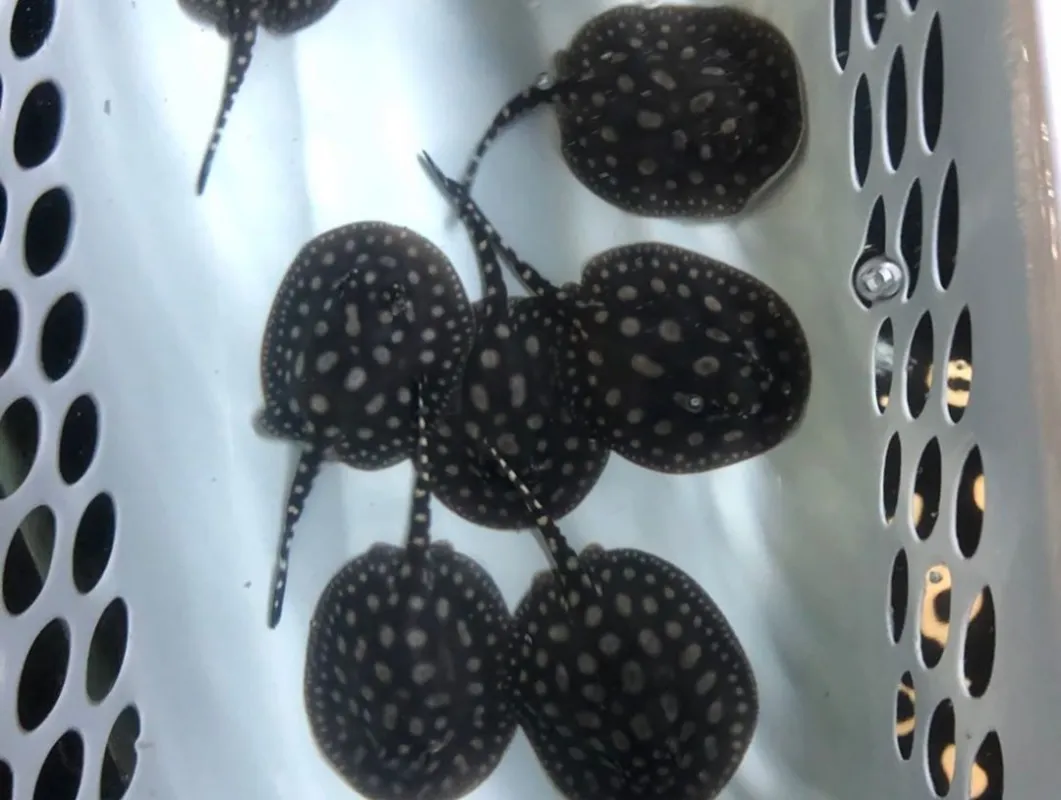
The Black Diamond Stingray Female is renowned for her flat, disc-shaped body that glides gracefully across the substrate, evoking the image of a living jewel. Typically measuring 12-18 inches in diameter, with some females growing larger, she has a smooth, velvety skin rather than scales, covered in a pattern of deep black with white or cream-colored diamond shapes that resemble precious gems. This coloration intensifies with age and proper care, making her a visual standout.
Her pectoral fins are broad and wing-like, allowing for effortless movement, while a long, whip-like tail extends behind, equipped with a venomous spine for defense. The mouth is located on the underside, adapted for bottom-feeding, and she possesses spiracles for breathing in low-oxygen conditions. As a female, she may display a slightly wider disc and more pronounced fin edges compared to males, aiding in identification.
Her eyes are small but keen, positioned on the dorsal side, and she lacks traditional gills, relying instead on her spiracles and skin for respiration. This adaptation makes her highly resilient in varied water conditions, adding to her prehistoric charm.
Behavioral Traits and Temperament
Black Diamond Stingray Females exhibit behaviors that reflect their bottom-dwelling, nocturnal nature, making them fascinating for observation. In the wild, they bury themselves in sand during the day, emerging at night to forage. In captivity, they are generally peaceful and non-aggressive, preferring to glide slowly or partially bury in substrate for security.
Females are known for their curious yet shy demeanor, often investigating tank decor or following the shadows of other fish. They are diurnal in aquariums with appropriate lighting but adapt to routines. Socially, they can coexist with compatible species in large tanks, though they thrive best alone or with another ray to avoid stress. Their movements are mesmerizing, with gentle flaps of the fins creating a hypnotic dance.
As females, they may show nesting behaviors during breeding seasons, digging shallow pits in the sand. Overall, they are docile towards humans but require gentle handling due to their sensitive skin and defensive tail spine.
Care Requirements for Black Diamond Stingray Female
Caring for a Black Diamond Stingray Female demands a commitment to spacious, specialized setups that replicate her riverine habitat. A minimum tank size of 150-200 gallons is recommended for a single female, with larger volumes for pairs or groups to accommodate her gliding needs. The tank should have a soft, sandy substrate to prevent abrasions, and plenty of hiding spots like rocks or caves.
Water parameters are critical: maintain a pH between 6.5 and 7.5, temperatures from 75°F to 82°F, and soft to moderately hard water. Excellent filtration is essential to handle waste, using a sump system or powerful canister filter for clean, oxygenated water. Regular water changes (20-30% weekly) and monitoring ammonia, nitrite, and nitrate levels prevent health issues.
Lighting should be moderate and diffused to mimic natural conditions, avoiding direct bright lights that might stress her. Provide a secure lid, as rays can occasionally jump or climb. Females may require slightly more space for potential breeding activities, so plan accordingly.
Diet and Feeding Habits
Black Diamond Stingray Females are carnivorous feeders, relying on a protein-rich diet to maintain their health and vibrant patterns. In the wild, they consume worms, insects, crustaceans, and small fish, which should be mirrored in captivity.
Offer a variety of frozen or live foods such as bloodworms, brine shrimp, blackworms, and mysis shrimp, supplemented with sinking pellets designed for rays. Feed once or twice daily, providing only what she can consume in 5-10 minutes to avoid overfeeding and water pollution. Females may have slightly higher caloric needs during breeding, so adjust portions accordingly.
A balanced diet supports her diamond patterns and overall vitality. Monitor her feeding to ensure she’s thriving – a healthy female will forage actively and maintain a rounded body shape.
Breeding Black Diamond Stingray Female
Breeding Black Diamond Stingray Females is a rewarding but challenging process for experienced aquarists. Females reach sexual maturity around 1-2 years, with breeding often occurring in dedicated setups.
The process involves courtship where the female lays egg cases (mermaids’ purses) that attach to rocks or plants. Males fertilize them externally, but females play a key role in selecting sites. Incubate eggs in a separate container with gentle water flow until hatching, which takes 4-6 weeks. Raising pups requires live foods like copepods, with females sometimes guarding the young.
Survival rates improve with pristine conditions. Successful breeding highlights the female’s nurturing instincts and contributes to captive populations.
Common Health Issues and Prevention
Black Diamond Stingray Females are susceptible to ailments like bacterial infections from wounds, parasitic infestations such as ich, and swim bladder disorders from improper diet. Their sensitive skin makes them prone to abrasions in rough environments.
Prevention focuses on stable water, quarantine protocols, and varied diets. Use aquarium salt sparingly for stress relief, and consult a vet for treatments. Early detection ensures her longevity, as females can live 10-15 years with care.
Popularity in the Aquarium Hobby
Black Diamond Stingray Females have surged in popularity for their unique beauty and manageable care in large tanks. Their gem-like patterns make them conversation pieces, with hobbyists sharing photos and care stories online.
Ethical sourcing from breeders promotes sustainability, as wild-caught specimens are less common due to conservation concerns.
Myths and Interesting Facts About Black Diamond Stingray Female
Myths include beliefs that their patterns bring luck, but they are simply adaptations for camouflage. Interestingly, females can “smell” food through chemoreceptors, aiding bottom foraging. A fun fact: they can live up to 15 years and possess a keen sense of touch via their skin.
Conservation and Ethical Considerations
Freshwater stingrays face habitat threats in South America. Captive breeding of Black Diamond Stingray Females helps preserve diversity. Responsible keepers choose bred individuals to reduce wild collection.
Conclusion: Embracing the Black Diamond Stingray Female
The Black Diamond Stingray Female embodies the elegance of freshwater rays, offering beauty and intrigue for dedicated aquarists. By prioritizing her well-being, you can enjoy her graceful presence for years. If drawn to this gem, research thoroughly and create a suitable haven – the rewards shimmer like her patterns.
Reviews
There are no reviews yet.
Related products
Arowana for sale
Arowana for sale
Arowana for sale
Arowana for sale
Arowana for sale
Arowana for sale
Arowana for sale
Arowana for sale
Be the first to review “Black Diamond Stingray Female”